Managing infrastructure with Pulumi and S3: a journey into code-driven IaC
Why self-managing Pulumi state in a versioned S3 bucket beats the default backends when control and compliance matter.
01 The short version
Pulumi has to keep infrastructure state somewhere, and both defaults come with constraints: Pulumi Cloud raises questions about data residency and compliance, while local storage doesn't survive contact with a team.
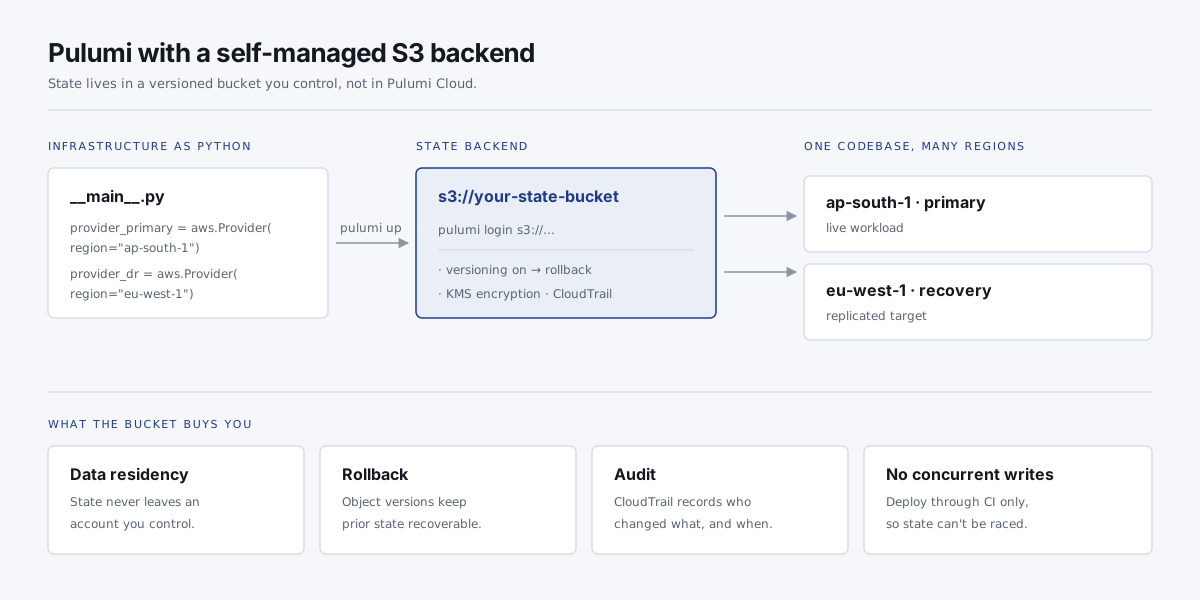
The alternative is self-managing state in a versioned S3 bucket. `pulumi login s3://bucket-name` switches the backend, and from there you deploy infrastructure written as ordinary Python, with the state file somewhere you control end to end.
Most of the piece is the operational detail that makes it safe: IAM policies scoped to the bucket, KMS encryption for production, CloudTrail for auditing, and preventing simultaneous deploys from corrupting state.
The pattern I keep returning to is configuring several AWS providers with different regions inside one codebase, which turns multi-region disaster recovery into provider configuration rather than duplicated stacks.
02What you'll take away
- Switching backends is a login command — it doesn't touch your resource definitions at all.
- Bucket versioning is what buys you rollback: state history is preserved, so a previous infrastructure state can be recovered.
- Multiple provider objects, each pinned to a region, let a single codebase deploy a primary and its recovery targets.
- Auditing and locking aren't optional on a team: CloudTrail for who-changed-what, and deploy-through-CI-only to avoid concurrent state writes.