My first dive into JWT authentication with FastAPI
What implementing token auth for the first time taught me — about JWT, and about learning unfamiliar things properly.
01 The short version
Implementing JWT authentication in FastAPI was the first time I had to turn theoretical knowledge of tokens into something that actually worked in a running service.
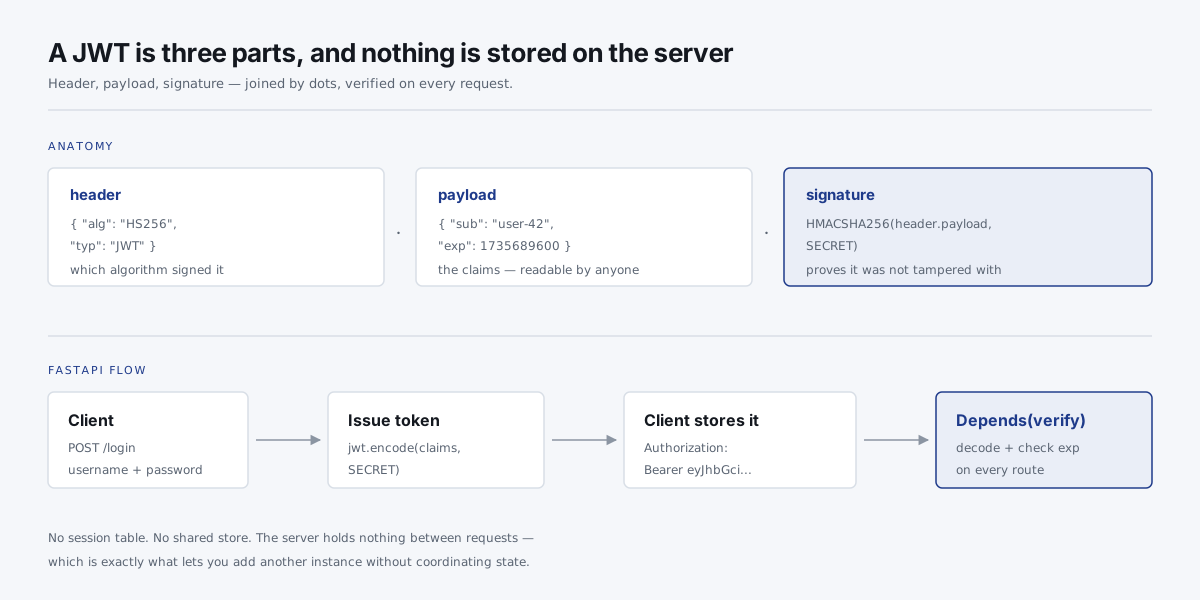
The write-up covers the anatomy of a JWT — a header carrying the algorithm, a payload carrying the claims, and a signature verifying integrity — and then the FastAPI side: PyJWT for encoding and decoding, and `Depends` for wiring authentication into endpoints.
The reason to reach for JWT is statelessness. There's no server-side session store, which is what lets a service scale horizontally without shared session state.
It's as much about method as about tokens: understand the why before the how, treat debugging as a skill worth practising, and reach for the official documentation before the tutorials.
02What you'll take away
- A JWT is three parts — header, payload, signature — and knowing which is which makes debugging far less mysterious.
- PyJWT plus FastAPI's Depends is enough to secure endpoints; the dependency system does most of the work.
- Statelessness is the point: nothing about the session lives on the server.
- Writing up a first attempt has real value — the beginner's view of a problem is one you can't reconstruct later.