Exploring Confluent Kafka: a developer's experience in real-time data processing
Tracking job-run status across distributed systems by treating Kafka topics as tables instead of reaching for a database.
01 The short version
Tracking the status of job runs across distributed systems usually means a database table and a lot of polling. I wanted to see how far an event-driven approach would go instead.
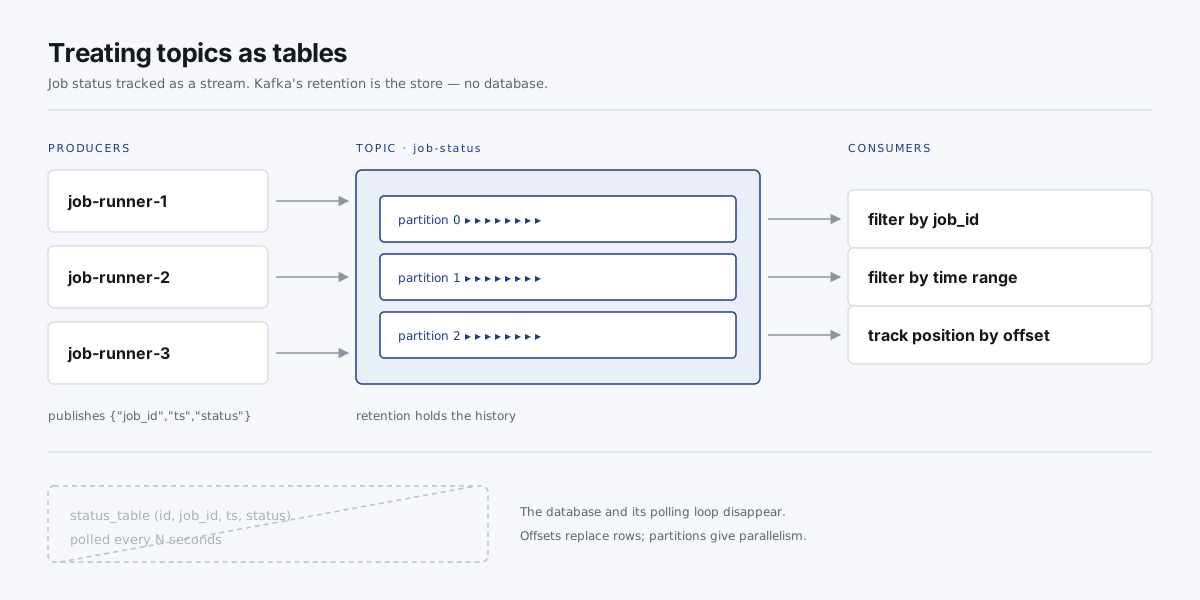
The experiment treats Kafka topics as the store rather than as transport. Producers publish JSON status messages carrying a job ID, a timestamp and a status; consumers poll the topic and filter by job ID or time range to reconstruct what happened.
No conventional database is involved. Kafka's retention holds the history, partitioning gives parallel consumption, and offsets track what each consumer has already seen.
"Treating topics as tables" is the phrase I kept coming back to — it isn't right for every workload, but for high-throughput status streams it removes an entire layer.
02What you'll take away
- Producers publish structured JSON — job ID, timestamp, status — so consumers can filter without extra lookups.
- Partitioning is what makes it scale: consumers work in parallel instead of contending over one table.
- Offsets, not rows, are how you track progress through the stream.
- Kafka's own retention becomes the persistence layer, which is what removes the database from the picture.